
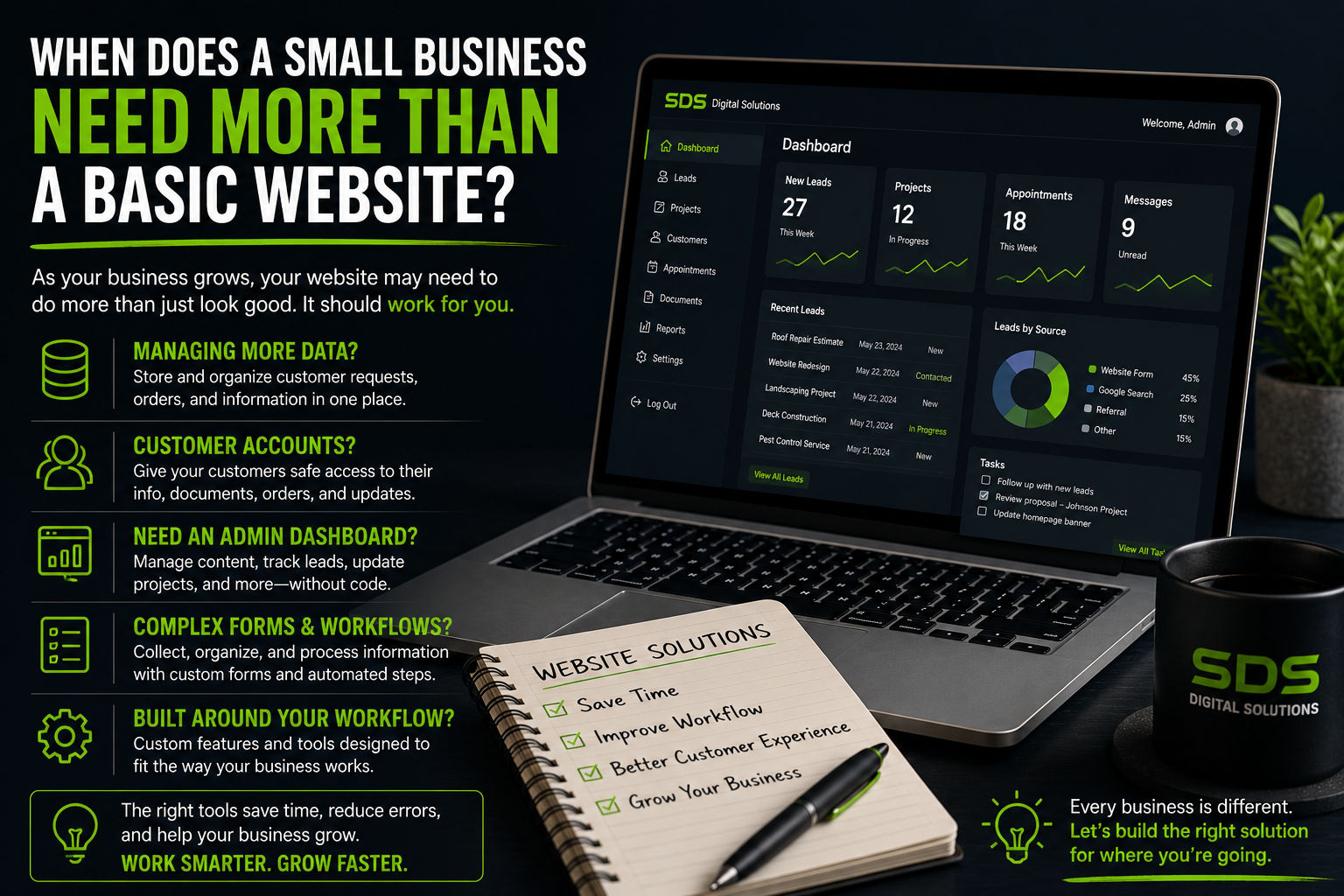
When Does a Small Business Need More Than a Basic Website?
For many small businesses, a simple website is exactly what they need.
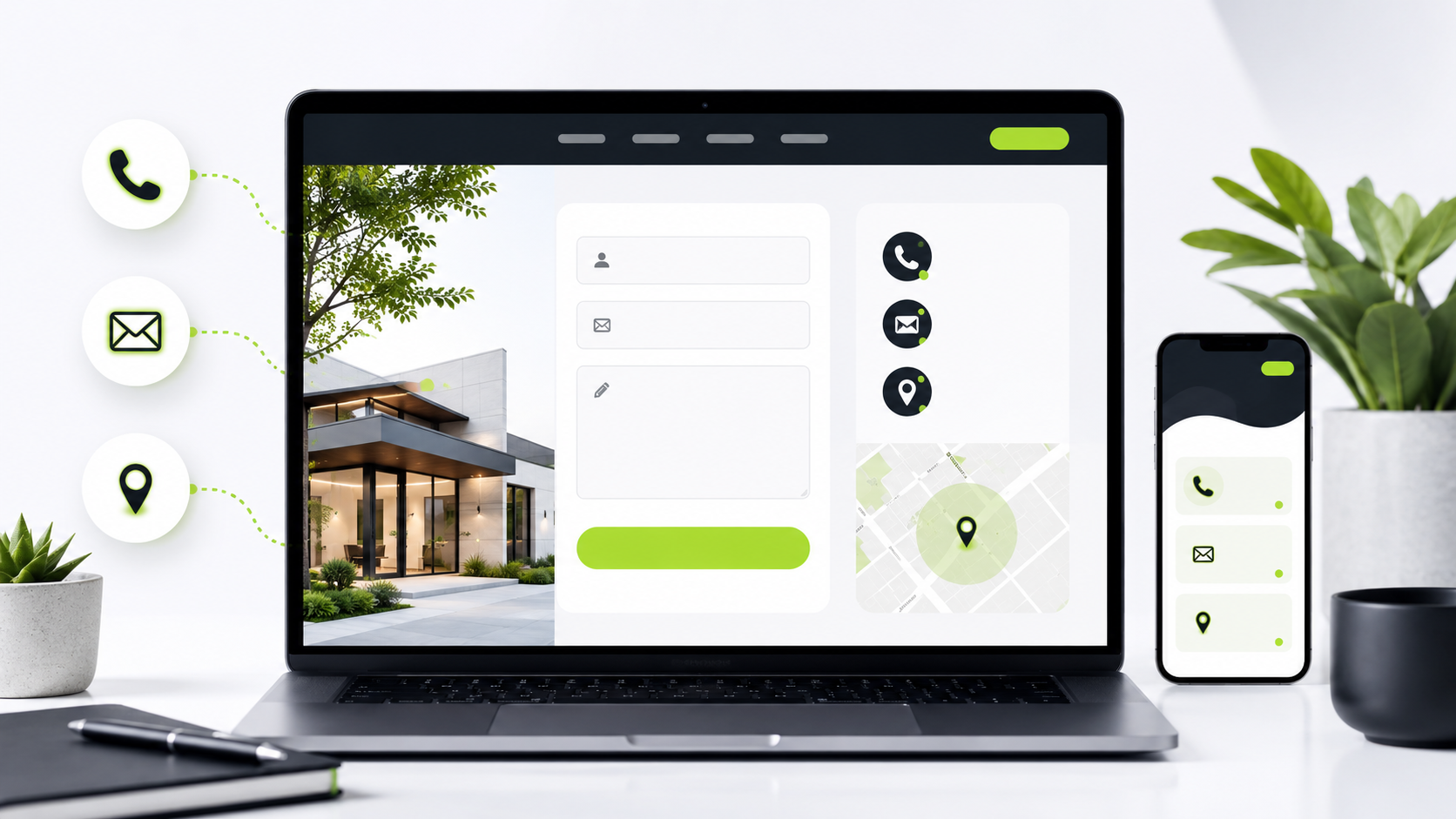
A professional homepage, service pages, an about page, contact information, and a contact form may be enough to create a strong online presence.
But businesses change.
As your company grows, you may eventually reach a point where your website needs to do more than display information.
That is when it may be time to consider a more customized website or web application.
What Is a Basic Business Website?
A basic small-business website usually focuses on providing information.
Its main purpose is to tell visitors:
- Who you are
- What you offer
- Where you operate
- How to contact you
- Why they should choose your business
There is nothing wrong with that.
In fact, many businesses never need anything more complicated.
Adding features simply because they sound impressive can make a website harder to use and more expensive to maintain.
The better question is:
Is there a problem that a custom website feature could solve?
You Are Managing Too Much Information Manually
One sign that your business may need something more advanced is when you begin managing large amounts of information manually.
Maybe you are keeping customer requests in spreadsheets.
Maybe staff members are sending updates through several different systems.
Maybe you are copying information from website forms into another program every day.
At a certain point, a custom system may help organize that information automatically.
For example, website submissions could be stored in a database and displayed inside a private dashboard.
Instead of searching through emails, authorized users could log in and view everything in one place.
Customers Need Their Own Accounts
Some businesses eventually need customers to access private information online.
That could include:
- Project updates
- Documents
- Order information
- Appointment details
- Account information
- Downloadable files
- Private photo galleries
- Membership content
A regular public website is not designed to handle those situations by itself.
A customer account system can provide each user with secure access to the information intended for them.
This type of feature requires more planning than adding another webpage, but it can greatly improve the customer experience when there is a genuine need for it.
Your Team Needs an Admin Dashboard
Custom websites are not always about features customers can see.
Sometimes the most useful part of a website is behind the scenes.
An administrative dashboard could allow a business to:
- Manage website content
- Review inquiries
- Add or update products
- Manage customer accounts
- Track submissions
- Publish blog posts
- Update listings
- Review website activity
Instead of editing code or contacting a developer every time something changes, authorized users can manage certain parts of the website themselves.
The exact tools depend on how the business operates.
Your Forms Are Becoming More Complicated
There is a big difference between a simple contact form and a system that needs to collect, organize, and process information.
Maybe customers need to submit detailed project requests.
Perhaps different answers should display different questions.
Maybe submissions need to be assigned a status such as:
New → Reviewed → Contacted → Completed
Once forms become part of a business process instead of simply sending an email, a custom database-backed system may make more sense.
You Need Features Built Around Your Workflow
Off-the-shelf tools are useful because they are designed to work for many businesses.
The downside is that they are designed to work for many businesses.
Sometimes your workflow is different.
You may find yourself changing the way your business operates just to fit the software you are using.
Custom development allows the system to be designed around the process instead.
For example, a business could have a website where customers submit service requests, staff review them through an admin dashboard, and each request moves through different stages until it is completed.
The feature is built around how that particular business works.
Custom Does Not Have to Mean Huge
The phrase custom website can make people think about enormous software projects.
That does not always have to be the case.
A website might remain mostly simple while adding one custom feature.
For example:
- A searchable project database
- A customer login area
- A quote management dashboard
- A custom booking system
- A private document portal
- A product management system
- A members-only section
You can start with what is actually needed and expand later.
That is often a better approach than trying to build everything at once.
Know When Simple Is Better
Custom development is not automatically better.
If a five-page website meets all of your business needs, adding accounts, dashboards, and databases would only create unnecessary complexity.
The technology should match the problem.
A small landscaping company that mainly needs customers to call for estimates may benefit far more from a fast, professional service website than an elaborate custom application.
On the other hand, if that same company eventually manages hundreds of quote requests, several crews, customer accounts, and scheduling information, its needs may change.
Build for the Business You Have
Your website should support how your business operates today while leaving room to grow tomorrow.
Start simple.
Pay attention to the problems that begin appearing as your business grows.
When repetitive tasks, customer needs, or internal processes become difficult to manage, your website may be able to help.
That is the point where custom development becomes valuable—not because it is more advanced, but because it solves a real business problem.
At Schmidtz Digital Studio, we build both straightforward business websites and more customized web solutions. The goal is not to make a website more complicated than it needs to be. The goal is to build the right solution for the job.

Comments
Some comments may be flagged by the security system and held for review.
No approved comments yet. You can be the first to join the discussion.
Leave a Comment
Your first name will be shown publicly after approval. Please keep comments respectful and on topic.