
Managing money should feel simple, not overwhelming.
That idea is what pushed us to start working on one of our newest projects at Schmidtz Digital Studio: a standalone budgeting web app designed to help people better understand where their money is going, prepare for upcoming expenses, build savings, and make smarter day-to-day financial decisions.
Why We Started Building It
There are already plenty of budgeting apps available, but many of them either feel overly complicated, lock too much behind a subscription, or give users a lot of numbers without helping them understand what those numbers actually mean.
Our goal is to build something different.
We want this tool to feel practical enough to use every day while still offering more powerful planning features as the platform grows.
Instead of only showing what you spent last month, we want it to help answer questions like:
How much of my next paycheck is already committed?
What bills are coming up?
How much can I safely spend right now?
Am I on track for my savings goal?
Am I about to overspend in a category?
What could my cash flow look like a few weeks from now?
That kind of information can actually help someone make a decision before the money is already gone.
What We’re Planning to Include
We’re building the platform in stages, but the overall vision includes a wide range of budgeting and financial planning tools.
One of the major features we’re currently working toward is Paycheck Allocation.
This will allow users to take an incoming paycheck and assign that money toward bills, savings, spending, debt, and other priorities before they start spending it.
We’re also planning features such as:
- Recurring bill tracking
- Subscription tracking
- Expense categories
- Quick expense entry
- Savings goals
- Sinking funds
- Debt tracking
- Bill calendar
- Monthly budget overview
- Safe-to-Spend calculations
- Cash-flow forecasting
- Overspending warnings
- Simple financial reports
The idea is to bring all of these features together in one place instead of making people rely on several apps or spreadsheets.
More Than Just an Expense Tracker
Tracking expenses is useful, but we want this project to become much more than a list of transactions.
A major part of the platform is focused on helping users look ahead.
For example, if someone knows that rent, insurance, utilities, and several subscriptions are coming out before their next paycheck, the system should eventually be able to account for those expenses and give them a clearer picture of how much money is actually available.
That is also where features such as sinking funds and savings goals become important.
Instead of being surprised by a yearly expense, users could gradually set money aside for things like vehicle repairs, holidays, insurance, vacations, or other future purchases.
Financial Calculators Are Also Planned
Another part of the roadmap is a collection of financial calculators.
Some of the tools we are considering include:
- Debt Payoff Calculator
- Emergency Fund Calculator
- Savings Goal Calculator
- Paycheck Allocation Calculator
- Sinking Fund Calculator
- Loan Payment Calculator
- Credit Card Payoff Calculator
- Subscription Cost Calculator
- Budget Percentage Calculator
- Can I Afford This? Calculator
Some of these calculators may eventually be available publicly without requiring an account.
That would allow anyone to use helpful financial tools even if they are not ready to use the full budgeting platform.
For registered users, the long-term goal is to connect these calculators with their actual budget information, allow them to save different scenarios, and provide deeper forecasting.
Built for the Web First
We are developing the project as a web application first.
This allows us to concentrate on building the budgeting system, security, user accounts, data management, and core features before expanding to other platforms.
The long-term plan is to eventually connect the platform with a mobile app while keeping the same account and financial information available across devices.
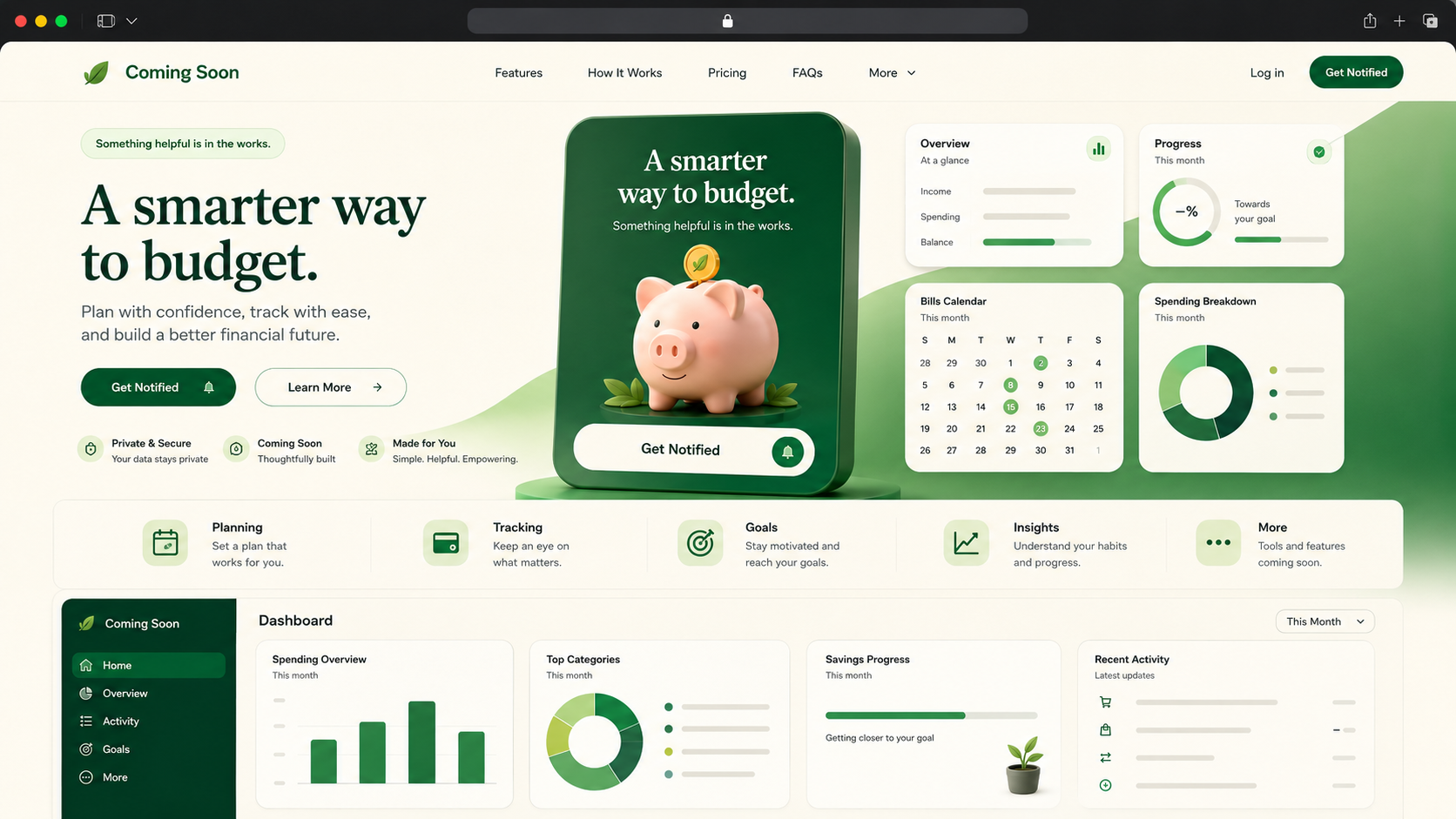
We are also creating a visual identity that is completely different from the main Schmidtz Digital Studio website.
The new project uses rich green tones paired with warm off-white colors to create a cleaner, calmer, and more approachable financial experience.
Keeping the Free Version Useful
One thing we feel strongly about is that the free version should still be genuinely useful.
Someone should not have to immediately subscribe just to create and manage a basic budget.
Our current direction is to offer a free version for everyday budgeting while a future paid option could provide deeper planning features such as advanced forecasting, alerts, reports, automation, and connected financial tools.
We are still working through exactly where that line will be drawn because we want the paid version to offer meaningful additional value without intentionally making the free version frustrating.
This Project Is Still Growing
This budgeting platform is still under active development, and there is a lot left to build.
That is also part of what makes this project exciting for us.
Rather than waiting until everything is finished, we want to share parts of the development process along the way.
That includes what we are building, why certain features were chosen, what works, what needs to change, and how the platform evolves over time.
The image accompanying this post is a concept showing the general direction we are taking with the homepage and overall interface.
There will undoubtedly be changes as development continues, but the larger goal will stay the same:
Build a budgeting tool that helps people understand their money, plan ahead, and feel more confident about what comes next.
We’ll have more to share as development continues.
— Schmidtz Digital Studio
Comments
Some comments may be flagged by the security system and held for review.
No approved comments yet. You can be the first to join the discussion.
Leave a Comment
Your first name will be shown publicly after approval. Please keep comments respectful and on topic.