
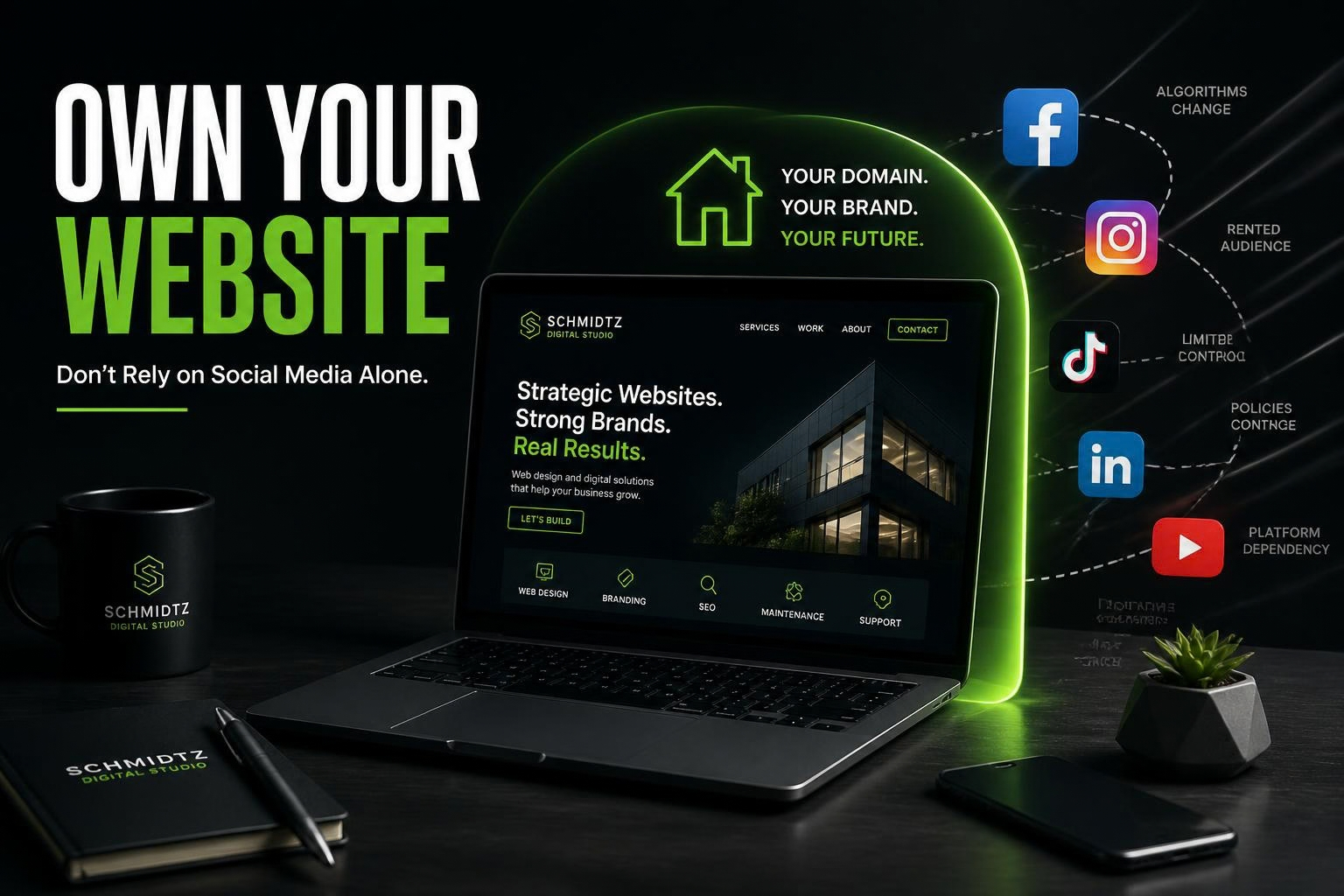
Social media can be one of the most useful ways for a small business to reach people. It is fast, familiar, and built around sharing. But there is a major difference between using a platform and owning your digital home.
Your social profile is space inside someone else's system. Your website can be the place your business controls.
Social media is rented space
Platforms can change algorithms, layouts, rules, reach, account features, and advertising options. A strategy that works today may not work the same way next year.
That does not mean you should abandon social media. It means you should avoid making one platform the only doorway to your business.
Your website gives you control over the customer experience
On your own site, you decide what visitors see first, how services are explained, what calls to action appear, and how the customer moves through the information.
You are not competing with an endless feed, suggested videos, comments, or another company's ads while someone is trying to understand your offer.
A website can organize information better
Social posts are designed to move. Important information gradually disappears down the feed. A website gives permanent places to services, pricing guidance, FAQs, portfolios, policies, booking, and contact information.
Customers can find what they need without searching through months of posts.
Your website can support search traffic
People search the web with specific questions and needs. A well-structured website gives your business pages that can answer those searches over time.
Useful articles, service pages, product pages, and guides can continue working long after they are published.
Your website can do things social media cannot
A website can include structured quote forms, calculators, customer portals, booking, product sales, dashboards, private resources, file uploads, or other custom tools tied directly to the way the business operates.
Social media is excellent for attention. Your website can turn that attention into action.
Owning the site can reduce platform dependence
If a social account is suspended, hacked, or simply loses reach, a business with its own website still has a destination it can point customers toward.
That same principle matters for sellers who rely heavily on a marketplace. Marketplaces can be valuable sales channels, but building an independent branded storefront creates another path to the customer.
Email and direct contact become easier to centralize
Your site can collect inquiries through forms designed for your business instead of forcing every conversation into direct messages. It can also direct customers to your preferred phone number, email, scheduling system, or newsletter.
Social media and a website work better together
This is not an either-or decision. A strong approach uses social platforms to reach people and the website to give them a stable place to learn, compare, trust, and act.
A Facebook post can highlight a project and link to the full portfolio. A short video can introduce a service and send viewers to a quote page. A product announcement can link to an independent storefront.
Start with a website you can actually maintain
Ownership does not require a giant custom site. A focused site with a homepage, services, about information, contact options, and a few useful resources can be enough to establish a strong foundation.
Then the site can grow as the business grows.
Build your home base
Use social media for what it does well, but give your business a place online that is built around your goals. If you are ready to create or replace that home base, the SDS Project Discovery & Quote Request form is the best place to start.
 When Does a Small Business Need Custom Software Instead of a Basic Website?
 7 Website Features That Can Save a Small Business Time
 How Much Does a Small Business Website Cost in 2026?
Comments